Mounjaro, Matrescence and Menopause - the 2026 trifecta
There are three Ms I’ve been thinking about a lot lately: Mounjaro, Matrescence, and Menopause.
They may seem unrelated. They’re not.
For the first time in history, there are more women in their forties having babies than there are teenage mothers. This shift has been building quietly over the past three decades, driven by education, careers, fertility treatment, and economic reality. But biology hasn’t moved with the same flexibility.
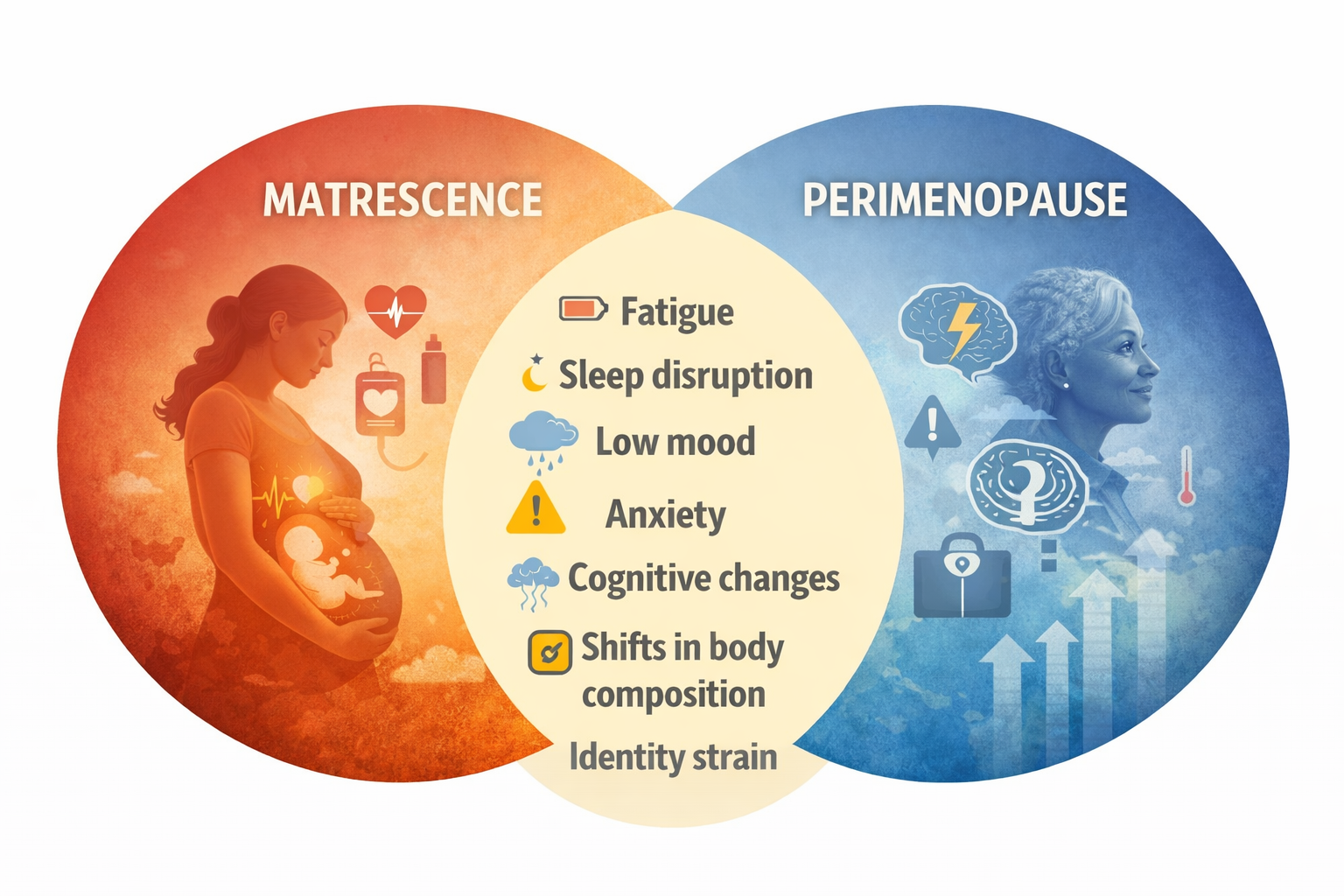
Perimenopause - the hormonal transition that can begin in the late thirties and early forties- is now increasingly overlapping with Matrescence: the profound biological, psychological, and social transformation triggered by becoming a mother.
Both are periods defined by hormonal flux. And both can turn a woman’s sense of self inside out.
Clinically, these phases can look remarkably similar. During pregnancy and early motherhood, hormones reshape the brain, metabolism, sleep, mood, and identity. During perimenopause, the gradual decline in oestrogen, progesterone and testosterone can bring brain fog, insomnia, anxiety, low mood, weight redistribution, and changes in libido. At work, women describe feeling less sharp, less confident, less themselves, just as their responsibilities are often peaking.
The question many women are asking, quietly and often with guilt, is: what is happening to me — and why now?
Into this already complex picture has entered a third ‘M’: Mounjaro
Studies estimate that 1 in 3 women are now using mounjaro and other GLP-1 weight loss medications - such as Ozempic and Wegovy.
GLP-1 receptor agonists are drugs that mimic the action of our naturally occurring hormone, Glucagon-like peptide-1 (GLP-1). This hormone is involved in regulating our appetite, blood sugar & insulin levels and gut movements.
As a consultant obstetrician-gynaecologist, I look after women across the life course. In the past two years, a growing number of my patients, particularly those who are peri- or post-menopausal, are using these medications for weight loss. Some estimates suggest that perimenopausal women make up the majority of users.
Ever since I realised how widespread their use had become, I changed my practice.
I now ask every woman I see a simple question: “Are you taking weight-loss medications?”
Not because I’m opposed to these drugs.
But because they interact with hormones that shape women’s health at every stage of life.
There is evidence that when GLP-1 drugs are used responsibly alongside nutritional, activity and psychological support, they have a positive long-term impact on heart health, diabetes, breast & womb cancer and inflammatory diseases, beyond mere weight loss.
All drugs come with risk, especially when used irresponsibly. GLP- 1s are no different
NB: GLP-1s are not ‘new drugs’; what’s new is the widespread use of them for weight loss amongst people without type 2 diabetes
GLP-1s, as a class of drugs, were first discovered in the late 1980s.
GLP-s1s have been approved for use in people with type 2 diabetes since 2005-2006 in North American & Europe
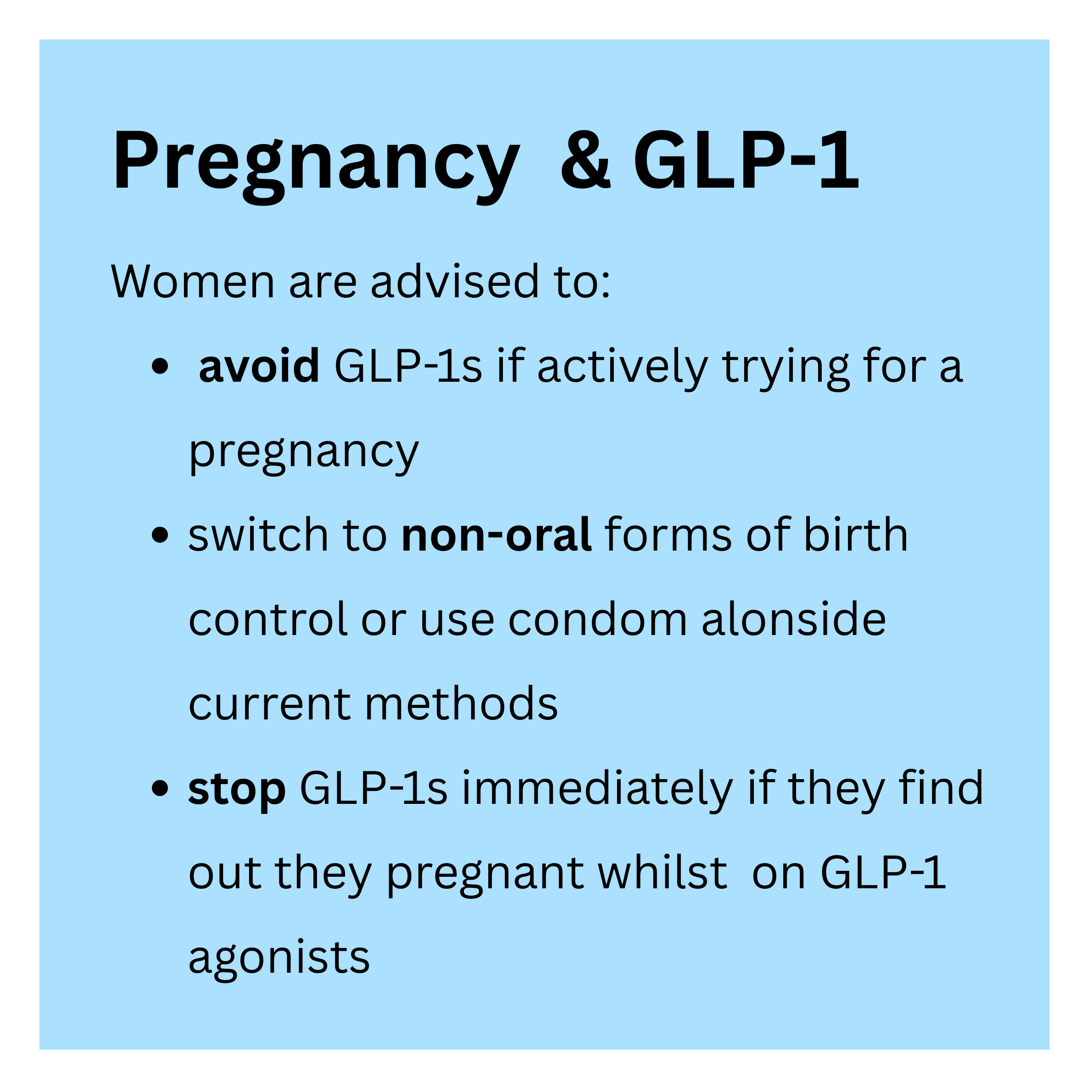
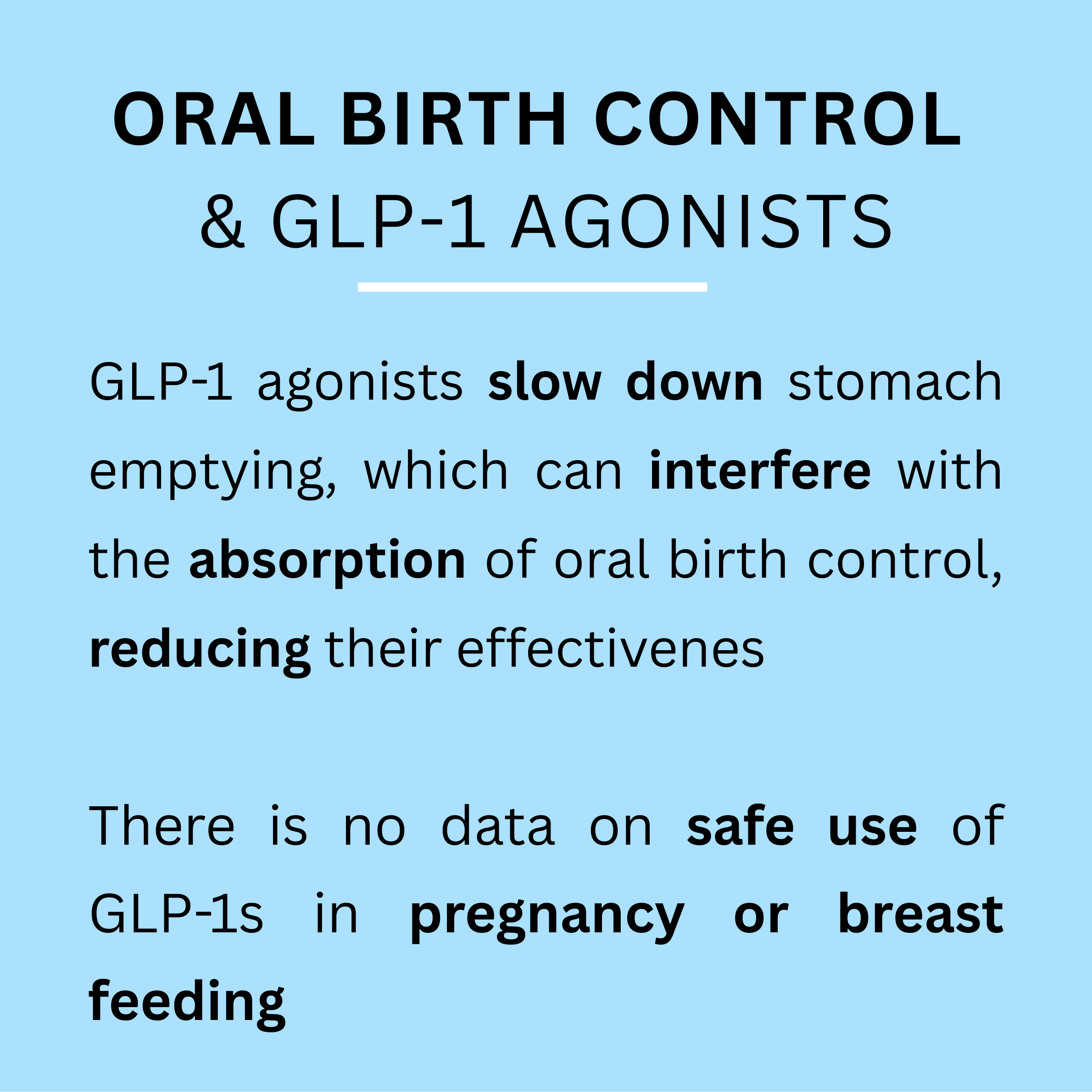
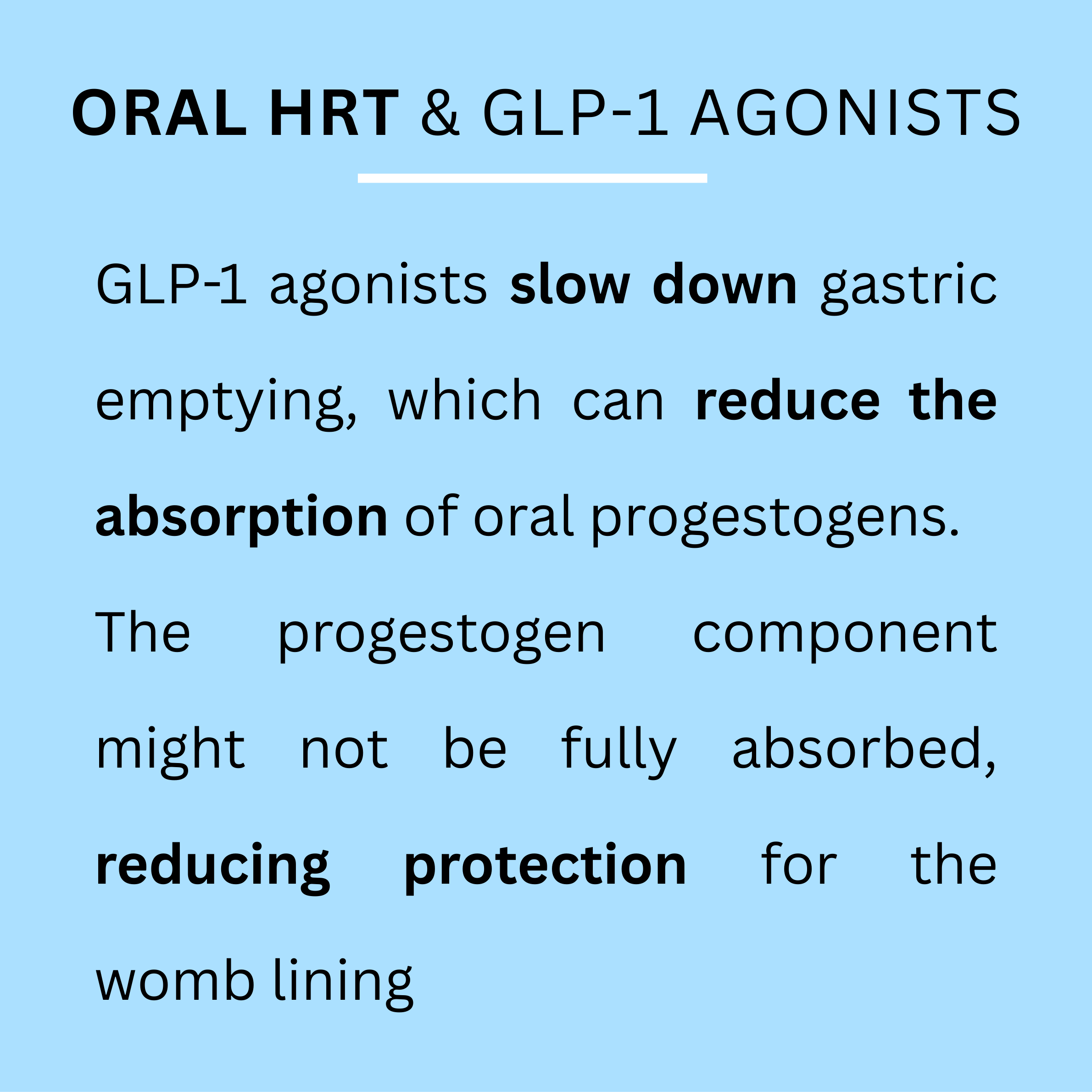
Weight loss, particularly when rapid, affects ovulation, fertility, menstrual bleeding, muscle mass, bone density, mental well-being, and cardiometabolic risk. GLP-1 medications can alter the absorption and effectiveness of oral medications, including oral contraception(birth control) and oral hormone replacement therapy (HRT).
Yet many women are prescribed these drugs with little discussion of how they intersect with reproductive or midlife care.
There is also Stigma. Shame. Silence.
Some women don’t disclose use because they fear judgment from clinicians, colleagues, or even family. That silence is risky. We must stop shaming people using weight loss medication and instead be curious about how to make access safer and equitable.
This matters not just clinically, but publicly. We are rolling out powerful metabolic drugs at scale, disproportionately to women in midlife, without fully accounting for how they interact with the female life course -from fertility to menopause to long-term bone and heart health.
So here’s the call to action.
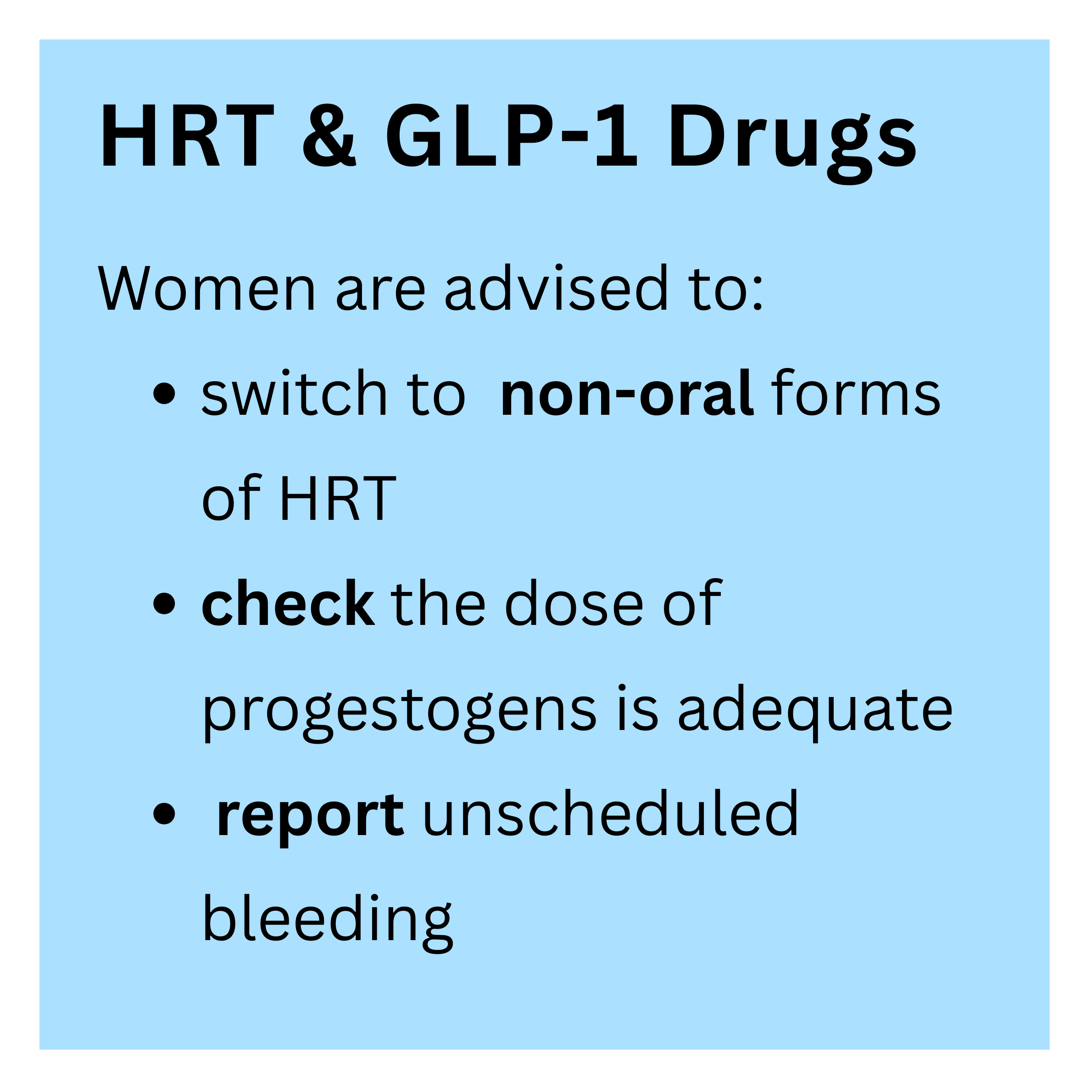
If you are a Woman using GLP-1 medications: tell your healthcare provider. Ask how these drugs might interact with every medication you take, especially hormonal contraception and HRT. If you’re on oral contraception or oral HRT, discuss non-oral options such as patches, implants, coils, gels or sprays. Make sure progesterone dosing is adequate to protect you from unopposed oestrogen.
If you are a Clinician: ask the question — routinely and without judgement. Weight-loss medication use is now part of women’s hormonal history. Treat it as such.
And if you are shaping policy or health systems: recognise that matrescence and menopause are not niche women’s issues. They are predictable, population-level transitions. Arguably, it is a window of opportunity to extend the healthy life span for women. The way we manage GLP-1 drugs within them will shape women’s health and health inequality for decades.
The three Ms are already colliding in women’s lives. It’s time our conversations and our care caught up.
Here’s a question I’d like to explore
Is there a public health argument for weight loss medications?
Comment below
REFERENCES
Matrescence to Menopause: a Second Window For Female Longevity
British Medical Society Advice on Use of Incretin-Based Therapy in Women on HRT
McKinsey Health Institute – Closing the women’s health gap: A $1 trillion opportunity
https://www.mckinsey.com/mhi/our-insights/closing-the-womens-health-gap-a-1-trillion-dollar-opportunity-to-improve-lives-and-economiesUK Women’s Health Strategy
https://www.gov.uk/government/publications/womens-health-strategy-for-england/womens-health-strategy-for-englandNature Medicine – Reviews on GLP-1 receptor agonists and metabolic health
https://www.nature.com/articles/s41591-024-03412-wNEJM – GLP-1 receptor agonists and cardiometabolic outcomes
https://www.nejm.org/doi/full/10.1056/NEJMoa2307563NHS MBRRACE-UK – Maternal mental health and postnatal outcomes reports
https://www.npeu.ox.ac.uk/mbrrace-uk/reportsFDA – GLP-1 receptor agonists: prescribing information and drug interaction guidance
https://www.ncbi.nlm.nih.gov/books/NBK551568/European Medicines Agency (EMA) – GLP-1 receptor agonists safety information
https://www.ema.europa.eu/en/medicines/human/referrals/glp-1-receptor-agonists